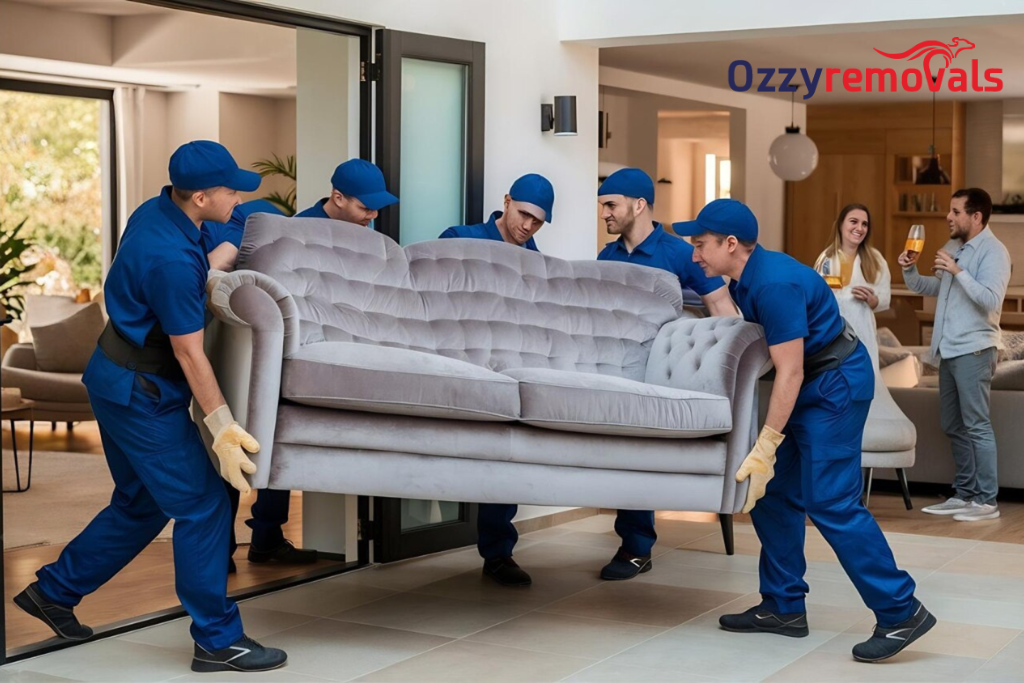
Every move has that one moment. You’ve got the couch off the truck, you’ve carried it down the path, and now you’re standing in front of the front door realising there is absolutely no way this thing is going through that opening without a plan. Or a miracle.
It happens on almost every move we do at Ozzy Removals. Perth homes, particularly the older ones in suburbs like Fremantle, Subiaco, Victoria Park, and parts of the inner north were not designed with modern oversized furniture in mind. Doorways are narrower. Hallways are tighter. Stairwells in two storey homes leave almost no margin for error.
The good news is that move large furniture through small doors is a solved problem. It just requires knowing what you’re doing before you start trying to force things through openings they don’t fit.
Here’s how it actually works.
Measure Before Moving Day: Not On It
This is where most problems start. People assume their furniture will fit because it got into the current place somehow, without stopping to think that maybe it came in through a different door, or was assembled inside the room, in addition to the previous owners having the same problem as well as just left it there when they moved out.
Before moving day, measure every piece of large furniture you’re moving. Height, width, depth. Then measure every doorway, hallway, and stairwell it needs to pass through at both the old place and the new one. Don’t just measure the door opening, measure the approach too. A ninety degree turn from a hallway into a room is a completely different challenge to a straight carry through an open doorway.
Write the measurements down. Compare them. If something looks tight on paper, it’ll be tight in reality. Better to know that three weeks before the move than standing in the hallway on moving day with a couch jammed at a forty five degree angle.
Take the Doors Off Their Hinges
The single most underused trick in furniture removal and the one that solves more problems than almost anything else.
A standard interior door in a Perth home sits in a frame that’s typically around eighty to ninety centimetres wide. The door itself takes up around three to four centimetres of that. Taking the door off its hinges gets you those centimetres back, and on a tight move, three or four centimetres is sometimes exactly the difference between something fitting and something not fitting.
It takes five minutes with a screwdriver or a hammer along with a nail punch to knock the hinge pins out. Pop the door off, lean it against a wall out of the way, and suddenly you have the full frame opening to work with.
Do this at both ends: the door you’re taking the furniture out of and the door you’re taking it into. While you’re at it, remove any door handles or protruding hardware that could catch on furniture as it passes through.
Disassemble Whatever You Can
If it came apart to be built, it can come apart to be moved. This is the principle that solves most large furniture problems.
Bed frames almost always disassemble fully. Wardrobes with removable shelves and hanging rails are much easier to move in panels than as a single unit. Sofas with removable legs suddenly drop ten to fifteen centimetres in height, which often makes the difference when getting them through a doorway or around a corner. Dining tables with removable legs go from an unwieldy four metre carry to something two people can manage easily.
Examine all large furniture before the day of moving and see what can be disassembled. Make unit photos prior to disassembling so that you have some reference to assemble it back. The screws and fittings on the piece were in labelled ziplock bags taped on as usual.
The lighter a piece of furniture is and the smaller its footprint, the more possibilities you get to get it through a tricky area.
The Tilt and Pivot Method
For sofas and couches that can’t be disassembled, the tilt and pivot is how you get them through doorways they look too big for.
Stand the sofa on its end, vertically, with the back of the sofa pointing up. In this orientation most sofas are narrower than they are when sitting normally, which means they fit through doorways that looked impossible when you were looking at them the regular way.
Once it’s through the doorway, pivot it back to horizontal. This works particularly well in Perth’s older homes where the doorways are narrow but reasonably tall, the height of the opening gives you room to work with even when the width doesn’t.
For L-shaped sofas, the same principle applies but you need more people and more coordination. One person guides, two people carry, and everyone moves on a count rather than everyone doing their own thing at once.
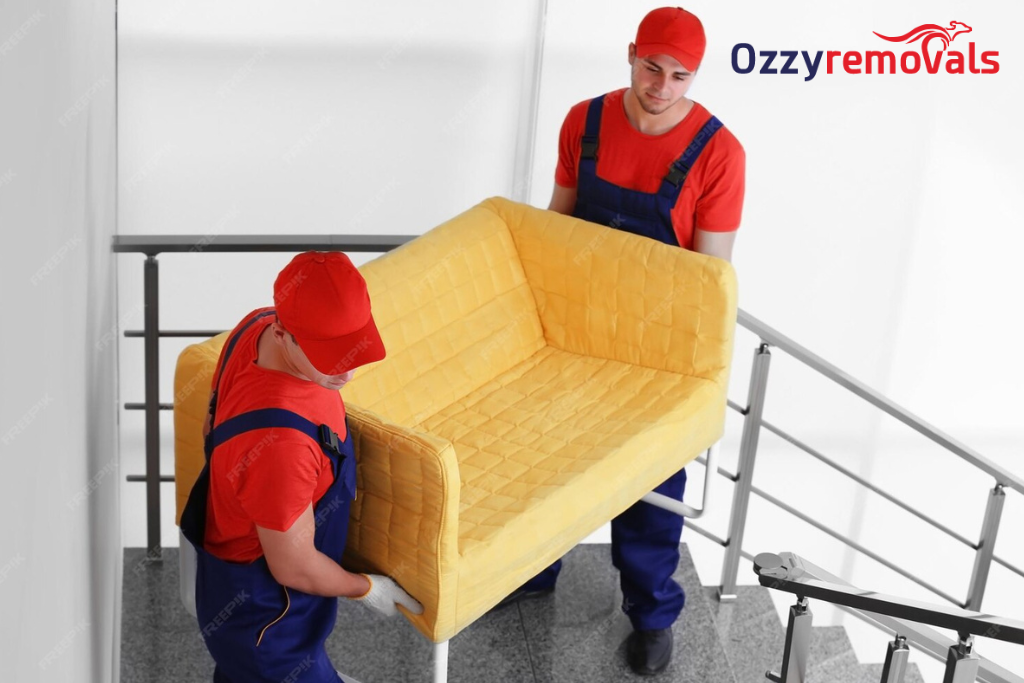
How to Move Large Furniture Upstairs
Stairs are where moving large furniture gets genuinely difficult and where people get hurt when they don’t approach it properly.
The first rule is never carry large furniture up stairs without at least two people. One at the bottom, one at the top. The person at the bottom takes the majority of the weight on the way up, they’re pushing more than lifting. The person at the top is guiding and controlling the angle.
Use furniture straps if you have them. Proper moving straps go around the furniture and over your shoulders, redistributing the weight away from your hands and arms and putting it through your body instead. They make a genuine difference on stairs and significantly reduce the risk of dropping something or injuring yourself.
Go slow. Communicate constantly. Agree on every step before you take it not “ready? go” but “moving on three, one two three.” Stairs punish rushed moves.
With very large furniture, a king size wardrobe, heavy bookcase, think whether this can be fitted to get it before it gets to the stairs. It is always more secure and also more manageable to move large furniture in a staircase in panels than to attempt to transport a big heavy unit of furniture up a rather narrow staircase.
Protect the Walls and Doorframes
Perth rental properties especially, damage to walls and doorframes comes out of your bond. And moving large furniture through tight spaces is exactly when walls and doorframes get damaged.
Before anything large goes through a doorway, put cardboard or foam padding on the doorframe edges. Tape it in place. The few minutes this takes is nothing compared to the cost and hassle of repairing gouged paintwork or a chipped doorframe at the end of a tenancy.
Lay down cardboard or old blankets on the floor along every route the furniture will travel. Dragging is sometimes unavoidable with very heavy pieces and having something between the furniture legs and the floor prevents scratching and scuffing.

When to Call in the Professionals
A piano up a narrow staircase. A custom built wardrobe that’s too large to disassemble and too wide for every doorway in the house. An antique piece that can’t be risk damaged. A two storey home in an older Perth suburb with a stairwell that turns twice before it reaches the landing.
These situations need people who do this every day with the right equipment. Furniture dollies, stair climbing trolleys, shoulder straps, moving blankets, professional removalists carry all of it and know how to use it. The cost of hiring professionals for a difficult move is almost always less than the cost of repairing damage caused by attempting it without the right gear and experience.
Ozzy Removals has been handling difficult furniture moves across Perth for over 7 years. Tight doorways, narrow hallways, awkward stairwells, we’ve seen all of it and we know how to move large furniture safely without damage to the furniture or the property.
Before Moving Day: The Quick Checklist
Measure all large furniture and all doorways, hallways, and stairwells at both properties. Identify everything that can be disassembled and do it before the move. Remove doors from hinges at tight doorways. Gather furniture straps, moving blankets, and cardboard for floor and wall protection. Brief everyone helping on the tilt and pivot method for sofas. Plan the route through each property before anything gets picked up.
Knowing the path before you start is what separates a smooth move from a stuck couch and a damaged doorframe.
For moves that need professional hands, call Ozzy Removals on 0410 000 256 or email booking@ozzyremovals.com.au. Based in Cloverdale WA, servicing moves across Perth as well as all of Australia.
Frequently Asked Questions (FAQs)
How do you get a large sofa through a narrow doorway in Perth?
Stand it vertically on its end, back of the sofa pointing up. Most sofas are narrower this way and fit through doorways that look impossible horizontally. Once through, pivot it back down. Remove the door from its hinges first to gain every centimetre available.
Should I disassemble furniture before moving it through small doors?
Always if you can. Bed frames, wardrobes, dining tables with removable legs, broken down into parts, all of it becomes manageable. Remove sofa legs too. Even ten centimetres less height or width makes a real difference in tight doorways along with narrow Perth hallways.
How do you move large furniture up stairs safely without injury?
Two people minimum, one at the bottom pushing, one at the top guiding. Use furniture straps to redistribute weight through your body rather than your hands. Move on a count, not on instinct. Go slow, and communicate every step, as well as disassemble anything large before it goes near stairs.
How do I protect walls and doorframes when moving large furniture?
Tape cardboard or foam padding to the doorframe edges before anything large goes through. Lay cardboard or old blankets along floor routes to prevent scratching. In rental properties, especially wall and doorframe damage comes straight out of your bond, five minutes of protection saves hundreds in repairs.
When should I hire professionals to move large furniture in Perth?
When it involves stairs and a piece that can’t be disassembled. When doorways are genuinely too narrow for standard methods. When the furniture is antique, fragile, or irreplaceable. When it’s a piano. If getting it wrong means serious damage or injury, call professionals, it’s always worth it.